COLLABORATIVE
LEARNING AND SYNERGY
Collaborative learning is a high synergy team effort that is built upon mutual respect, shared understanding, democratic participation and diversity. Studies support the fact that individuals learn more and faster in cooperative groups where the members feel safe enough to take the risks necessary to learn and to grow. Ruth Benedict documented the fact that cooperative groups learned and accomplished more than competitive groups in which group members were more distrustful and at odds with each other. She described the effect that was created in cooperative groups as synergistic where the whole became greater than the sum of its parts and mutual benefit was developed by the same act at the same time. This process in collaborative or cooperative groups of creating mutual benefit by the same act at the same time is transformative in nature as the group as well as the individual members change as they learn how to work together and cooperate at increasingly higher levels of participation. High synergy groups are built upon mutual benefit by the same act at the same time and they have the power of transformation.
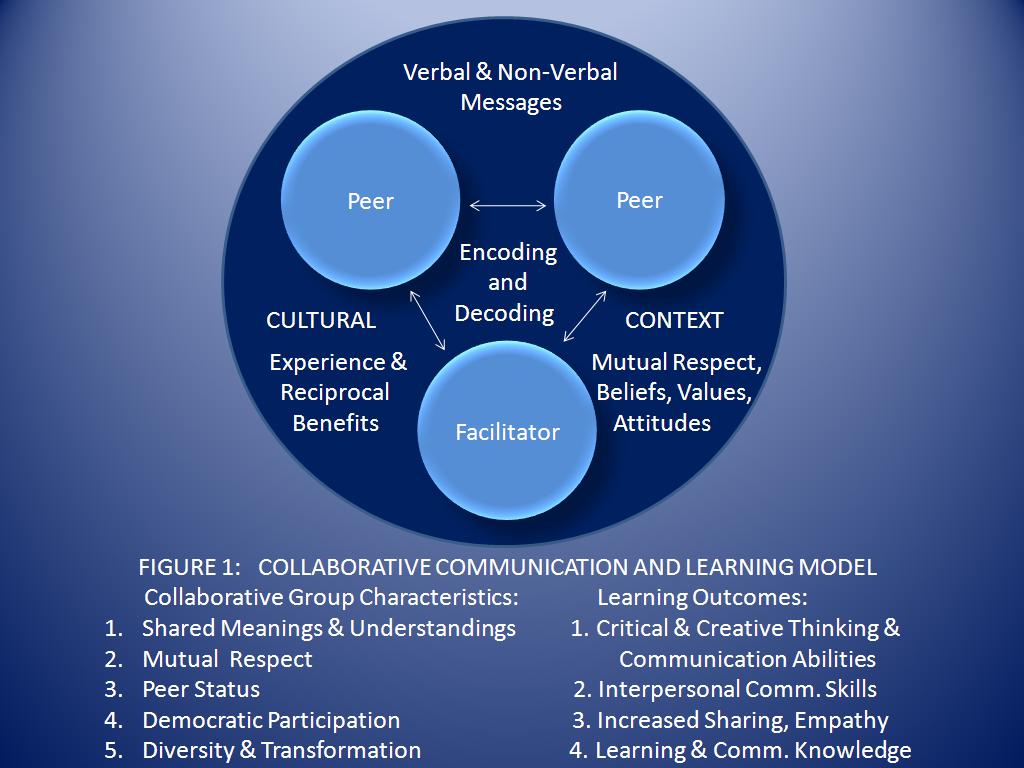
These high synergy groups of collaborative learners have certain characteristics in common (See Figure 1). They thrive on diversity and learning from each member’s unique contributions and experiences. While they acknowledge their differences, they learn to move past them by working through disagreements as they come to them. Most importantly, they see their different life experiences, cultural or ethnic backgrounds and different views as opportunities to share something special about each other and learn from each other. This approach allows the group members individually and collectively to begin to see problems, issues and experiences in new ways. This willingness to put themselves in someone else’s shoes empowers them to see the world through the lens of other people’s experiences, beliefs and values without giving up their own beliefs. Since beliefs and values shape who we are as individuals and groups, we must confront these beliefs or values as they relate to the issues, problems and experiences that we are discussing and learning from. The groups that succeed best in this process are high synergy groups insofar as they have learned to accept and transcend their differences enough to respect each other’s views and values no matter how different they may be from their own. And, they can move on to solve problems and issues that competitive, low synergy groups find impossible to address in any depth.
So, high synergy collaborative groups are problem solvers who know their areas of unique contribution and are able to put the mission of the group before their own interests. Also, because they are able to listen for understanding and respect each other’s views, these high synergy group members are critical thinkers who value dialogue and democratic discussion to resolve problems and address issues. And, the learning outcomes that result from participation in these high synergy groups include: a higher order of critical communication and sharing abilities, better interpersonal communication skills, collaborative leadership and learning knowledge and greater sharing and empathy. The power of these high synergy collaborative groups is evident in their ability to transform themselves and their organizations and lift other groups and individuals up to increasing levels of motivation and performance.
- What makes collaborative learning groups, high synergy groups? Describe high synergy groups and how do they improve performance?
- What are the main characteristics of collaborative high synergy groups and organizations?
- Why do cooperative or collaborative groups learn and accomplish more than competitive groups or organizations? What is the meaning of “mutual benefit by the same act at the same time?” How does it create synergy in groups and individuals?
- How does synergy work to transform groups, individuals and organizations?
- What are the primary learning outcomes for collaborative groups and individuals?
- How are diversity and critical thinking essential to collaborative learning?
- How does collaborative
learning improve communication among individuals, groups and
organizations?
